


Technology skills learned
Instructional technology is a theory and practice of an academic field that uses diverse technological processes which are specifically used for teaching and learning. This includes the incorporation of new technological processes as they become available to facilitate teaching, and learning to improve student performance in hands-on activities. Virtual environments provide an online setting to enhance and demonstrate knowledge in required courses, technology, and software. Technology performance increases human knowledge and presence. A complex, integrated process involving people, procedures, ideas, devices, and organization, for analyzing problems involved in all aspects of human learning (AECT, 1977).
Instructional Aid &"Technologies"
As advancements in technology slowly change everyday learning using digital mobile devices, software integrations, and pc adaptations, the environment provides benefits such as accessibility, adding value to the student's independent performance to achieve the given goal. The theory and practice of design development, utilization, management, and evaluation of processes and resources for learning. (AECT, 1994). In the M.A in Instructional Design & Technology program, the technologies used for program projects are listed as: Nvivo, Adobe, SPSS, Camtasia, Zotero, and Google Applications to include add-ons such as one tab and pear deck. These technologies helped me create an online learning course, ADDIE Design template courses, and course projects.

Adobe software allows you to create original content for designing and having an authentic design.


Example One Tab- Condensed all tabs you need to access in an organized list for you to reaccess in one place.
SPSS- Statistics is a statistical software suite by IBM. Used for data management, advanced analytics, multivariate analysis, buisness intelligence, and criminal investigation. Created a graph using density data.
Google sites- Created two asychrounous elearning courses by integrating slides, docs, and used google drive as my storage.


Tutorials- creating & recording video tutuorials and presentations.
Example of Zotero - automatically senses as you browse and creates references and bibliographys from using word doc, libre office and google docs.
Esther's knowledge in developing education literacy
Virtual Reality

3D Software
CBCT- Cone Beam Computed Technology
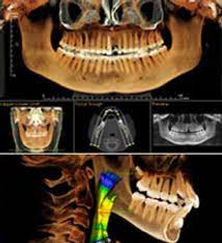
Sleep Apnea Obstruction
Sagittal- Left to right
CBCT is advanced imaging that has high applications in the field of dentistry. Used for maxillofacial imaging to diagnose any abnormal findings for future treatment.The image is highly accurate and provides 3-dimensional volumetric data in the axial, sagittal, and coronal planes. The beam of the CBCT is a 360-degree scan that moves around the patient's head in a stabilized position. The view of the CBCT allows identifying any findings such as jaw pathologies, malignant tumors, inflammatory bone lesions, and cortical and trabecular bone. CBCT can also inspect the pathologies related to sinuses and obstruction of sleep apnea.
Coronal- View from top to bottom

Axial - View from apex to base
As a trainer teaching the different dimensions to evaluate each part of the image takes practice and much coordination with the computer and the software. 3D Software ON-DEMAND is software that supports views and diagnostic platforms for the dentist & specialists to complete digital diagnostics. The treatment plan platforms Ondemand3D support; implant planning, dynamic lightbox, and dental volume reformat. These three platforms allow the doctors to treatment plan the patient with accuracy and evaluate for any abnormalities. Each CBCT will have software to complete patient diagnostics.
CAD/CAM/3D Printing
Augment Reality
There is much 3D design software in the industry that offer different designs and products for custom medical devices. The glidewell.io is an in-office solution known to auto-generate restoration design using AI. There are two workflows that the case designer can choose. When the patient is being prepped for restoration the option to place a space maintainer/ temporary crown which is prefabricated is an option to maintain the space without an in-office custom crown. The ideal flow option is to design the crown chairside using the milling feature to create a crown. 3D printers produce accurate orthodotnic models, restorations, dentures, aligners, crowns, bridges, as well as surgical guides.


Elective Reflection
E-porfolio
Certificate & Publiction
Asychrounous
"Use Google Sites to create a professional portfolio site
for advancements in your career" By: Esther Cruz
ETEC 5410: Reflection
How to design a lesson plan with the intent to teach an asynchronous environment fully active agenda using technology aids and resources to increase participation and student engagement. The title of the course I designed is using google sites to design an eportfolio to advance your career. Observing the engagement and providing feedback in a virtual environment; it is vital for the learner to adapt to the technology provided and grow through utilization of resources by the instructor. In ETEC:5410 each discussion assignment this semester encouraged the college students to evaluate the instruction material designed by the student and provided additional aids that might be useful for the course the students chose to design. Through critique and self-journalling we learned to create instruction material specific to the course design. Practicing makes it perfect to increase eye motion, hand sensitivity, and comfortability to the new language which does take time to understand. I used ADDIE to design the lesson plan for the eportfolio course. I designed the course to be asynchronous with a creative eye for students to choose their own creativity, videos, images for their own eportfolio. They say beauty is in the eye of the beholder.

Reflection
ETEC:6850 Eportfolio & Comp Exam
ETEC 6850: Eportfolio&Comp Exam
In the eportfolio & comp exam I have learned that it is important to guide yourself in an essay format to answer questions on the comp exam. I also learned that in this course your knowledge will be tested to pass the program which is practiced in this course in two ways, first eportfolio defense and the second in an essay format comp exam. I have learned through assignments, assessments and verbal practice understanding the contents on my eportfolio its important to express when asked. During my practice interview I learned to stop and take a breathe in between questions. I also learned through my classmates experiences and through thier critiques to improve my performance when suggested. Their experiences shared a new perspective of creativity and to allow time to revisions for the new information.
As an instructor in a higher education environment, I have learned how much technology advancements have aided learners. I have also witnessed how technology has changed the industry of dentistry. Computer aid technology has increased the need for computer aid knowledge and fewer traditional methods taught are being replaced due to innovative technology. Patients benefit from the technology advancements with smoother procedures the less waiting time. In an educational environment, technology has helped students learn and make them feel confident using web-based applications for their own personal skills. When I think about the passion I have for digital technology the need to learn and integrate new applications to add more features to my everyday tasks only increases my skills as an educator for eLearning and online learning platforms.