With or without pudding?


Research
Research must always be of high quality to produce knowledge applicable outside of the research setting. Research is the process of systematic inquiry that entails the collection of data, and documentation of critical information. "The analysis & interpretation of that data/information collected with suitable methodologies set by specific professional fields and academic disciplines," (Unite for sight, n.d.). The main purpose of research is to inform action. Your study should seek to find results within the larger body of research.
Traditional Research "Hypothesis"
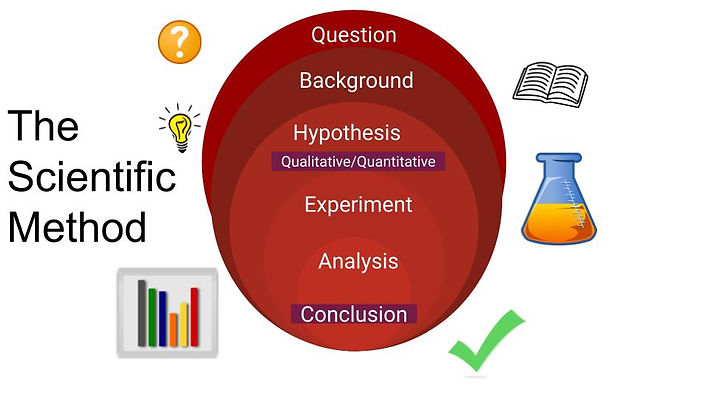
The hypothesis is a testable statement between two or more variables or a proposed explanation for some observed phenomenon. In a scienfific experiment of study, the hypothesis is a brief summation of the researchers prediction for the study's findings which may be supported or not by the outcome.
Traditional Research
.jpg)
Traditional Research
VS.
Action Research through
best practices
-
To draw conclusions. Focus on advancing knowledge in the field. Insights may be generalized to other settings.
-
Hypotheses/research questions derive from more general theoretical propositions.
-
Rigorous statistical analysis
-
Randome or representative sample.
Purpose
Context
Data Analysis
Disclosure
Sampling
-
To make decisions. Focus is on the improvement of educational practice. Limited genrealizability.
-
Research questions derive from practice theory plays secondary role.
-
Focus on practical, not statistical significance
-
Students with whom they work
Comparison
.jpg)
Action Research Plan
Steps to conduct actional research study

Research Methodologies
Research design based is the development of multiple design and research to captivize the strengths of qualitative and quantitative methods. Significant literature and theory generation, uses formative evaluation as a method of research and data collection; analysis methods used in quantitative or qualitative research. Quantitative research pertains to numbers and statistics. Qualitative deals with words and meanings. Researchers define design-based reserach as systematic but flexible methodologies to improve education practices through iterative analysis, based on collaboration among researchers & practioners in real world settings to design principles and theories.
Qualitative
Approach
Quantitative
Approach
Vs.
.jpg)
.jpg)
Subjective - Personal opinons and feelings rather than facts.
Complexity - difficulty or state of being confusing or complicated
Context- weaving together different strands of information.
Understanding - the power of comprehending, to apprehend general relations.
Objective- Expressive or dealing with facts
Replicability- in science it means to be able to repeat findings of another experiment
Testing- manipulating some factors in a system in order to see how the affects the outcome.
Measurement- creating critical solution enabling tools, metrics, models and knowledge for u.s. manufacturers.
Qualitative Data
Quantitative Data
Observations
VS.
Numbers
Involves the senses
"Smells just like roses"
Measurements and Counting
"What was the mass on the scale?"
Comparison of Methodologies

Mixed Methodologies
Qualitative & Quantitative
Data Collection
The research guide theory development, improves instructional design and based on application results identifies design possibilities. Whether you have collected data from students, teachers, or other individuals you must makes sure that the data is kept secure and confidential. The responsibility of the researcher to ensure anyonmity & confidentiality of participants data is vital and important. The synergy between practice and theory generates through its application to create principles that inform designers, practitioners, and researchers.


Interviews: qualitative reserach technique involves asking open-ended questions and collect elicit data.
Foucs Groups: qualitative approach provide a way to collect data and use the selected groups of people that come together to discuss specific question or issues.


Observations: scientists use observation to collect and record data, enable to develop then test, hypothesis and theories.


Usage Data: knowledge about behaviors and processes, write algorithms that process large amounts of information quickly, increase security & privacy to guide data drivien decision-making.
Data Collections Tools


Surveys: resreach methods used for colleting data from a predefined group of respondents to gain information.
Qualitative & Quantitative
Data Analysis
.jpg)
.jpg)
VS.
Once the researcher is done with the investigation and collected the data needed it is time to evaluate the fathered information and judge what has been found. This is an integral part of the process beause it contributes to the general knowledge and can assist scientists in finding new research to explore.
Results

-
What is next?
-
Whos the audeince?
-
Why is further reserach needed?
4. What ?
5.Where ?
6.Why is further reserach needed?
After collecting the data use the conclusion to verify or reject.
Action Reserch Guide
Research Reflection
Using "Zotero"
Advocating for Education Literacy in Digital Technology By: Esther Cruz
ETEC:5430 In traditional reserach the question is when will the grey area of how old one has to be to know what they want to learn and by when is the question. "Knowledge is power!" In comparison to action research the teacher invesitigates if a lessons provided to grades 2 & 3 learning math using a virutal simulator to teach multipling skills are necessary and useful. I learned that in many areas to increase competency with learning an analysis is needed to investigate to improve best practices. The equipment used to teach or to provide further instructions is needed to identfy the overal interpretation. With the increased integrations, the support for digital platforms used to improve daily performance the research is an important part of implementing needed assignements with in the curriculum. Virtual learning in a classroom setting changes how learners engage in a social environment through observations these social interactions help formulate the overall analysis with evidence in collected data. In action reserach the teacher uses evidence from the learner experience to show the needs to either increase the known material, provides more information from the designer use technology and prove the performance of the students intrepretation is valued.
